Track Vendor Exposure. Prioritize With Context. Reduce Third-party Risk.

Take control of risk across your vendor ecosystem

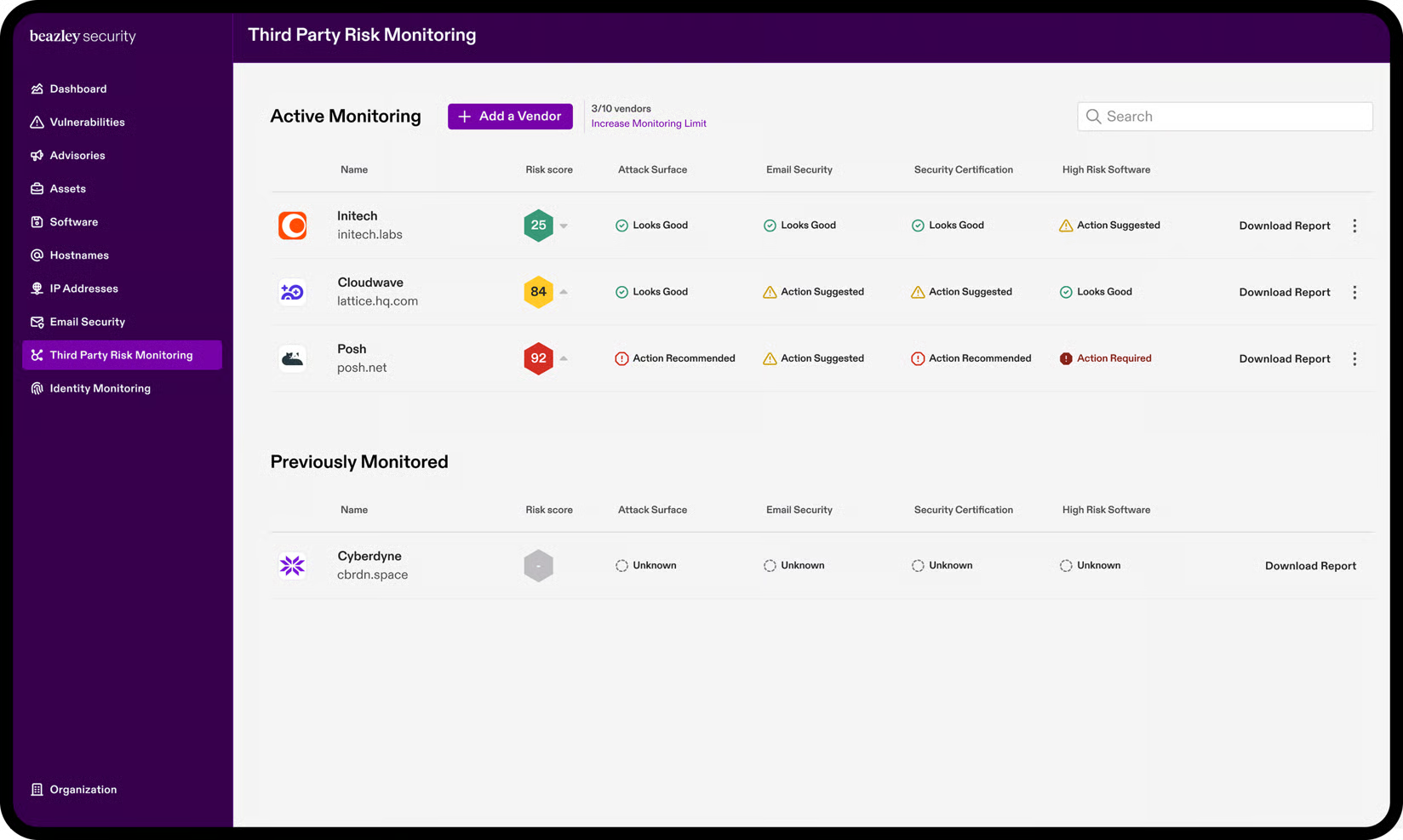
Third-party Risk Monitoring (TPRM) extends our Exposure Management platform to evaluate the external security posture of your vendors. Building on the EM platform, TPRM automatically discovers exposure across your supplier ecosystem and enriches findings with threat intelligence and business context to help you prioritize risk.

Unlike letter-grade scorecards that tell you a vendor earned a “C” or an “F” without showing the full evidence behind the rating, TPRM backs every finding with clear evidence and practical remediation guidance so you can work with your vendors to effectively reduce risk.

24/7

Continuous exposure visibility

Monitor each vendor’s external attack surface, including assets, services, software, and vulnerabilities to continuously prioritize third-party exposure.

0–100

Dynamic vendor risk scoring

The platform assigns a weighted risk score from 0–100, and updates it with every scan to re-rank vendor exposure as environments change. 

6,300+

Vendor-related cases handled

Beazley Security has handled thousands of downstream vendor incidents, providing unique insights for prioritizing risks based on real-world context.

Continuously monitor and reduce third-party risk

TPRM delivers continuous visibility into the external security posture of the vendors you depend on most. As part of vendor onboarding, your team is prompted to provide key context about how each vendor interacts with your organization:

  • Does the vendor have access to your internal systems or cloud environments?
  • Does the vendor store, process, or transmit sensitive data, such as user PII or employee records?
  • How critical is the vendor to your core operations?


This context is applied directly to the risk-scoring model, along with threat intelligence from Beazley Security Labs, to prioritize risk based on the actual potential impact on your organization.


Track your vendor exposure today

Event

Off the Record in the Vinyl Room at Black Hat USA

Register Now

Automate vendor exposure monitoring

Continuously monitor each vendor’s internet-facing assets, exposed services, risky software, known exploited vulnerabilities, certificate issues, and weak email security to identify exposure earlier and stay ahead of third-party risk. TPRM may also extend to dark web credential monitoring, helping your team uncover additional signals of vendor compromise.

Prioritize the vendors that introduce meaningful risk

Each monitored vendor is assigned a dynamic risk score (0–100), refreshed on every scan to re-rank vendors as risk changes. The score is not a generic math output or inflated severity number. It is calibrated to reflect true risk, based on how a real security analyst would judge the vendor after seeing the full evidence, so only vendors with meaningful, sustained exposure rise into the highest-risk range.

Visualize third-party exposure trends over time

Track how vendor cyber risk changes over time with a centralized dashboard that shows whether each vendor’s security posture is improving, declining, or staying the same. TPRM continuously refreshes exposure findings and risk scores as vendor environments change, helping your team move beyond point-in-time reviews and quickly identify the vendors that need closer attention.

Engage with your vendors to reduce risk

For each monitored vendor, your team can generate a shareable Security Posture Report (SPR) that summarizes externally observable risks, explains why they matter, and provides clear remediation guidance. Vendors can use step-by-step instructions to address key findings and rescan specific items to confirm fixes. While TPRM cannot enforce remediation inside vendor environments, it provides your team the evidence needed to engage vendors directly and make informed decisions toward reducing risk over time.

A Security Posture Report shows where your vendors are exposed and what they need to fix

Extend your ability to reduce exposure at scale

Beazley Security’s TPRM module is delivered as an extension of the Exposure Management platform, providing continuous, automated visibility into vendor security posture to prioritize risks and reduce third-party exposure. 

Exposure Management Exposure Management with Third-Party Risk Monitoring
Discover internet-facing assets continuously
Monitor domains, subdomains, IPs, services, and risky software
Prioritize risks with Beazley Security Labs intelligence
Track exposure as environments change over time
Receive personalized alerts for threats impacting your environment
Monitor your vendors' external security posture
Score vendor risk and re-evaluate automatically
Weight vendor risk based on business context and impact to your environment
Generate Security Posture Reports (SPRs) to support action

Request a demo of TPRM

Third-party Risk Monitoring helps you understand where vendor cyber risks may impact your organization and how to act before attackers do.

Activate TPRM today

FAQs About Third-party Risk Monitoring

What is Third-Party Risk Monitoring?

Third-Party Risk Monitoring (TPRM) extends Beazley Security’s Exposure Management platform to evaluate the external security posture of your vendors. It continuously discovers internet-facing assets associated with each vendor without agents, internal network access, or vendor cooperation. Leveraging the same attack surface intelligence engine as Exposure Management, the module evaluates each vendor’s environment based on externally observable signals, including:

  1. Internet-facing domains, subdomains, and infrastructure
  2. Public IPs, hosting environments, and exposed services
  3. Risky software accessible from the internet, such as remote access tools, CI/CD systems, and databases
  4. Known Exploited Vulnerabilities (KEVs) on exposed systems
  5. SSL/TLS misconfigurations and expired certificates that may point to unmanaged assets
  6. Email security posture, including SPF, DKIM, and DMARC, along with phishing risk exposure
  7. Dark web and ransomware signals (if activated with Dark Web Monitoring)

Exposure findings are then correlated with intelligence from Beazley Security Labs and the business context you provide about each vendor, such as system access, sensitive data handling, and operational criticality. The end goal is to identify which vendors are most likely to introduce meaningful third-party risk and help you prioritize exposure based on impact to your organization.

Do I need to activate Beazley Security’s Exposure Management platform to use TPRM?

Yes. TPRM is delivered as an extension of Beazley Security’s Exposure Management platform, not as a standalone product. It uses the same external discovery capabilities, attack surface intelligence engine, and Beazley Security Labs intelligence that power Exposure Management. This allows your organization to extend exposure visibility beyond your own environment and apply the same outside-in monitoring approach to the vendors you depend on most.

Does TPRM remediate vendor risks directly?

TPRM does not directly remediate issues inside vendor environments, and remediation cannot be enforced on third parties. It is a discovery, scoring, visibility, and vendor engagement service designed to help your team understand vendor exposure and drive more effective remediation conversations. For each monitored vendor, your team can generate a Security Posture Report (SPR) that summarizes externally observable risks, explains why they matter, and provides the evidence vendors need to take action. Reports include affected assets, technical details, and remediation guidance for supported findings, helping vendors understand what was found, where it exists, and how it can be addressed.

Vendors can also rescan specific findings to confirm fixes or mark findings as false positives when appropriate. While your organization may not control the vendor’s environment, TPRM gives your team a clearer, more accountable way to communicate risk, follow up on open issues, and support risk reduction over time. Additionally, if a vendor requests help addressing identified findings, your organization can direct the vendor to engage Beazley Security for professional remediation services under a separate engagement. 

What is included in a Security Posture Report?

Each report includes the evidence behind the findings, affected assets, and technical details such as IP addresses, ports, exposed services, expired certificates, risky software, and relevant vulnerabilities. For supported findings, SPRs also include “Take Action” guidance that helps vendors understand how to resolve the issue. The report is designed to make risk conversations with your vendors more productive. Instead of sending a vague score or generic concern, your team can show vendors what was found, why it matters, and what steps they can take to reduce exposure. 

How is TPRM different from traditional vendor risk assessments?

Traditional vendor risk assessments often rely on manual questionnaires, self-reported answers, and point-in-time reviews. These methods can be useful for contractual due diligence and compliance validation, but they are subjective and can quickly become outdated as vendor environments change. Instead, TPRM adds a continuously updated, outside-in view of vendor exposure based on what attackers can actually see from the internet. Instead of relying only on what vendors say about their security posture, TPRM evaluates observable risks such as exposed services, vulnerable systems, risky software, weak email security, and unmanaged internet-facing assets.

Additionally, TPRM gives your team more than a simple letter-grade scorecard. Instead of telling you that a vendor received a “C” or an “F” without explaining why, it backs each score with clear findings, supporting evidence, and remediation guidance. TPRM helps your team and your vendors understand what is driving risk, what needs to be fixed, and how to have more productive remediation conversations. While TPRM does not replace contractual due diligence, compliance attestations, or vendor questionnaires, it strengthens those processes with continuous vendor exposure monitoring and actionable evidence.

How often is vendor risk updated in the platform?

Monitored vendors are rescanned at least monthly, and findings and risk scores are automatically refreshed as vendor environments change. This helps your team move beyond annual questionnaires and static assessments and mature toward continuous vendor monitoring. Instead of waiting for the next review cycle, you can track whether a vendor’s external security posture is improving, declining, or staying the same over time. Your team can also rescan individual findings on demand to confirm whether a specific issue is still open after a vendor reports that it has been fixed. 

What’s in scope when activating TPRM?

In scope:

  • Continuous external discovery of monitored vendors’ internet-facing assets
  • Dynamic vendor risk scoring (0–100), refreshed monthly and reweighted by your business context
  • Exposure analysis correlated with KEVs and Beazley Security Labs intelligence
  • A Security Posture Report for each monitored vendor
  • 24x7 SOC technical support via the VERACIS™ portal or phone

Out of scope:

  • Remediation of vendor exposures
  • Internal or authenticated scanning of vendor environments
  • Active exploitation or penetration testing of vendor systems
  • Creation or review of vendor security questionnaires and self-assessments
  • Regulatory or compliance audits and review of compliance artifacts (such as SOC 2, ISO/IEC 27001, HIPAA, GDPR, or NIST SP 800-53)
  • Custom report generation, data export, or integration with third-party tools such as SIEMs, ticketing systems, or vulnerability management platforms
  • Exclusion of specific discovered assets, subdomains, or findings from scan scope
  • Physical security controls

Note: Clients are responsible for selecting and maintaining the vendors monitored in TPRM, providing accurate business context for each vendor, and engaging vendors to address identified risks. This includes keeping vendor lists current and updating details such as system access, sensitive data handling, and operational criticality when relationships change.

How quickly can my organization get started with TPRM?

TPRM is activated within your existing Beazley Security Exposure Management platform, with no additional infrastructure, agents, or internal access required. Once activated, your team can begin adding vendors for monitoring directly within the VERACIS™ portal, up to the number of vendors included in your package.

To get started, your team provides key vendor identifiers, such as vendor name and primary domain, and defines business context for each vendor during setup. The platform then begins discovering vendor exposure and generating risk scores shortly after activation. Because TPRM uses externally observable signals, vendors do not need to install software, provide credentials, or grant access to internal systems for monitoring to begin.

Activate TPRM to stay ahead of third-party risk